
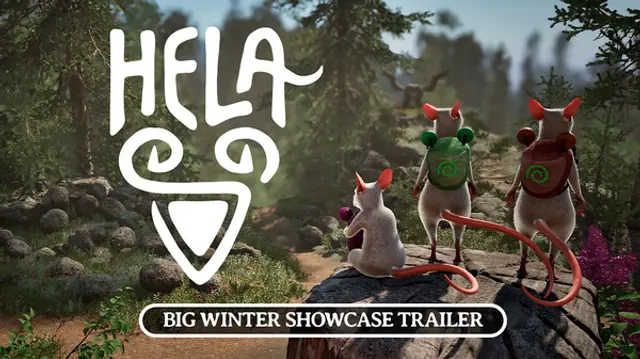
The Hela demo contains three different things worth picking up, and they are not the same kind of thing at all. One is a requirement, one is a hunt with no published total, and one is a fixed set of six. Treating them as a single checklist is the fastest way to waste a run.
The distinction matters because the demo is short. Thirty to sixty minutes is enough to finish the story and enough to miss most of what sits off the route, and the three categories reward different habits.
Three kinds, three purposes
| Collectable | Role | Published count |
|---|---|---|
| Glimmer | Objective resource — the way home opens once enough is gathered | Not stated; gathered along the route |
| Trinkets | Optional hidden items, tracked as a hunt | Not stated |
| Story pieces | Optional lore fragments | Six, in the demo |
Only the third has a number attached, and that number comes from the developers' own checklist rather than from player counting. The other two should be treated as open-ended.
Glimmer is the objective, not a collectable
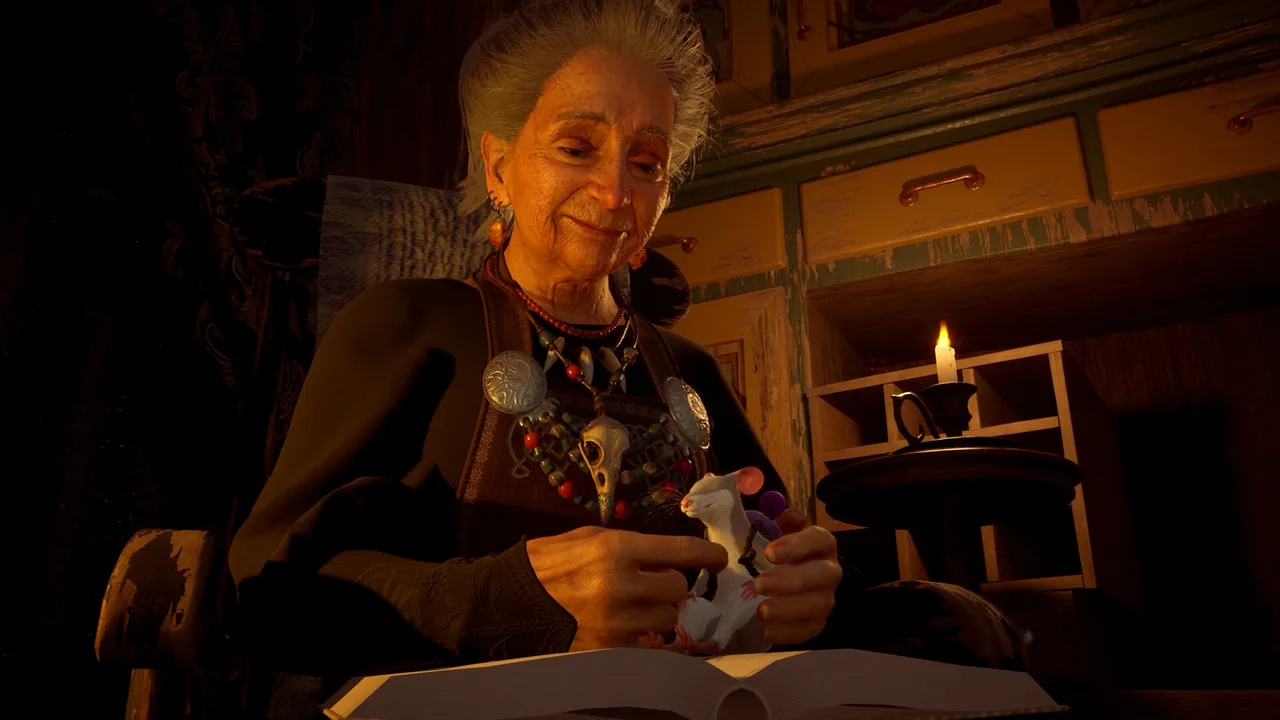
It is easy to file Glimmer next to the trinkets because both are small and both glow, but they do different jobs. Glimmer is the resource that completes the demo's second objective: restart the witch's protective magic, gather enough Glimmer, then find the way back to the cottage.
That means Glimmer is on the critical path by definition. A player who finishes the story has already gathered what the story required. Chasing more of it is not completionism, it is just gliding.
The one mechanical detail worth knowing is that Glimmer can be picked up in flight. Gliding through a cluster collects it in a single pass, which is why the open areas of the map feel generous rather than grindy — the resource is positioned along lines the backpack already wants to travel.
The trinket hunt
The demo's own checklist asks how many hidden trinkets the player has found, and it does not answer the question. That is deliberate: the trinkets are there to reward looking, and a published total would turn looking into a shopping trip.
The practical consequence is that there is no "done" state to chase. If a run ends with the story finished and a handful of trinkets found, nothing has been failed. The checklist is a nudge, not a scoreboard.
 Official media
Six story pieces
This is the only fixed set in the demo: six story fragments hidden across the map. They are the closest thing Hela has to traditional collectables, and they are the reason a second run is worth doing.
Because the number is fixed and small, the six are findable without a guide. What they ask for is patience rather than precision — the developers' own advice is to take your time, look closer, and not be afraid to experiment.
Why the count is not the point
A completion percentage would push players toward sweeping the map in a grid. Hela is built the other way around: it is an exploration game with no combat and nothing that can kill the player, so the only thing pacing a run is curiosity.
That is why the collectables are unevenly documented. The game wants the player to notice a hollow stump because it looks like a hollow stump, not because a marker appeared above it.
Where things tend to hide
The one rule that holds across all three categories is distance from the main route. The developers describe the extra content as waiting just off the beaten path, and that phrasing is accurate: the items are placed where a player who is already curious would go, not where a player following the objective would pass.
In practice that means height and edges. A ledge above a path is cheap to reach once gliding is learned, and the boundary between ground and water is where small objects read clearly against a plain background. Neither is a guarantee, and neither replaces looking.
Looking with two people
The demo supports two-player local split-screen, and the collectables are the content that benefits most from it. Two people wander in two directions, which doubles the ground covered per minute and roughly halves the chance that a side path gets skipped.
The catch is that the second player has to join before the session starts, so a couch plan needs to be made at the beginning rather than halfway through. Online co-op is not part of the demo at all, though the full game will support up to four players online.
Nothing carries over
The demo is a self-contained story on a map built for it, not a slice of the campaign. Progress does not transfer to the retail game on 1 December 2026, and neither do the trinkets or the story pieces.
That removes any reason to protect a save, and it changes how a run should be spent. The useful thing to carry forward is knowledge — where the backpack can reach, what a Shade spot looks like, and which plants are worth the detour — because those transfer even when the items do not.
A short checklist for a last run
If the demo is still open and a second run is on the table, three things are worth doing before it closes on 9 November 2026. Finish the Glimmer objective so the ending is seen, spend the remaining time above the main path rather than on it, and bring a second person if one is available.
Everything else is optional, and the game is relaxed enough that optional is a fine place to stop.