
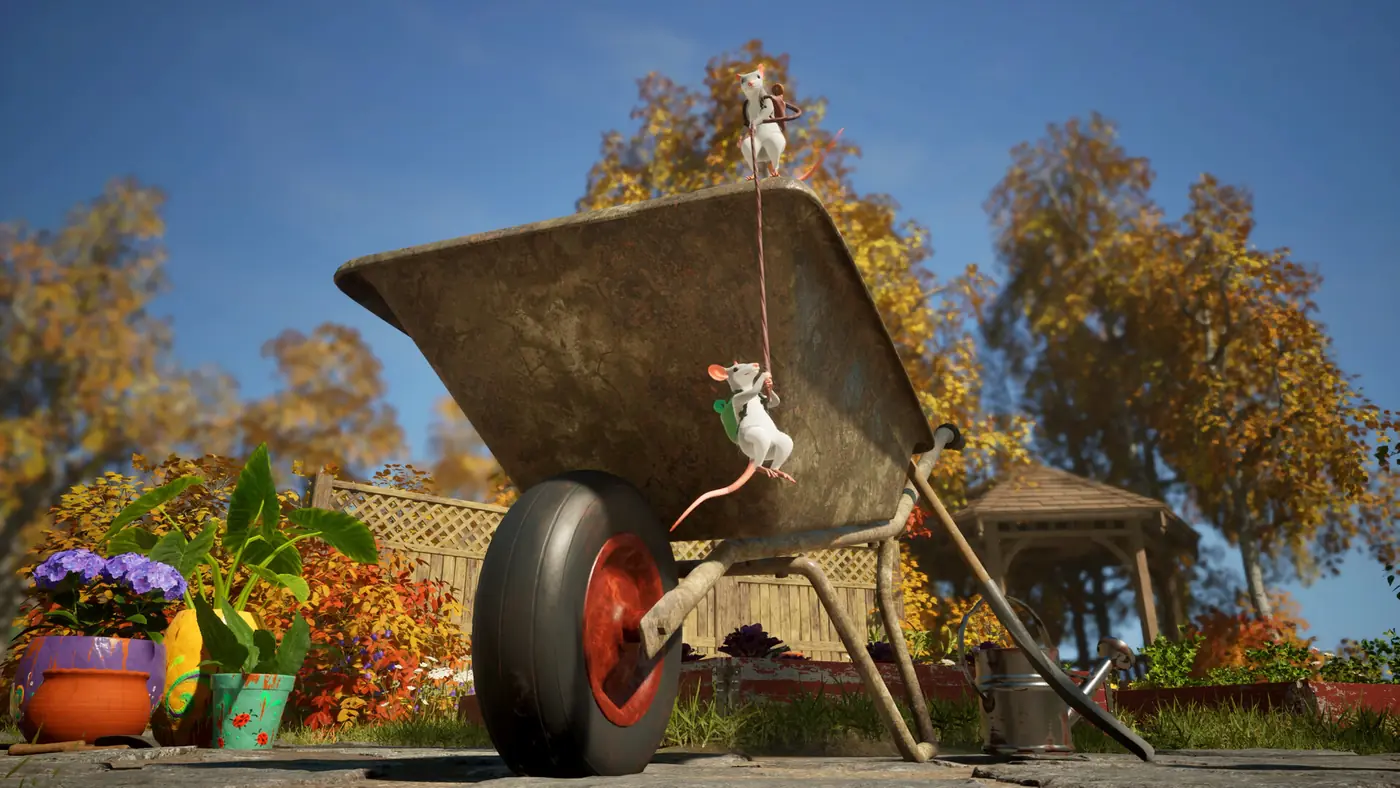
The demo is the only part of Hela: of Mice & Magic that can be played before 1 December 2026, and it is a self-contained story rather than a slice of the campaign. It runs 30 to 60 minutes on a map of its own, and progress does not carry into the retail game, so the sensible approach is to spend the time learning systems rather than rushing the ending.
The objective chain is short: restart the witch's guardian magic, gather enough Glimmer, and find the way home. Almost every mistake in a first run comes from doing those three things in the wrong order.
Learn what Froggy carries before you use it
The frog backpack is the whole movement vocabulary. It glides, it swings, and it carries, and each of those three jobs solves a different kind of obstacle. Gliding crosses gaps that are wider than a jump. Swinging turns a hanging point into a route across something you cannot walk over. Carrying moves an object from where it sits to where it is needed.
Spend the first minutes testing all three on safe ground. A player who learns the difference between a glide gap and a swing gap stops guessing, and guessing is what makes a short demo feel long. Nothing in the game can interrupt the practice, so five minutes spent on movement is five minutes well spent.
Treat Shade as the second player
The Shade System summons a magical copy of the mouse. In a solo run it is the answer to every puzzle that was built for two participants: positions that need two bodies at once, or a task that needs one mouse to hold something while another does the rest.
The habit worth forming early is to look at a puzzle and ask where a second pair of paws would stand. Once that question is automatic, the Shade stops being a menu action and becomes part of how the level is read. In a two-player split-screen session the same puzzles are solved by the other person instead, which is why the demo doubles as a preview of co-op.
Gather first, brew second
The loop is gathering, then brewing remedies, then using them on physics puzzles and on the creatures you meet. Skipping the gathering step leaves you standing in front of a puzzle with nothing to apply, and back-tracking for plants is the most common way a 30-minute demo turns into an hour.
Pick up what is on the route rather than detouring for it. The map is small enough that a second pass is cheap, and the return trip is usually where the missed items surface anyway.
What the remedies are for
The loop runs from gathering to brewing to application. Plants and materials become remedies, and the remedies are what the physics puzzles and the creatures along the route respond to. They are not a resource to hoard for a boss, because there is no boss and no combat anywhere in the game.
That is the reason the gathering habit matters. A player who treats remedies as something to save ends a short demo with a full bag and an unsolved route, then has to walk back for the material they skipped.
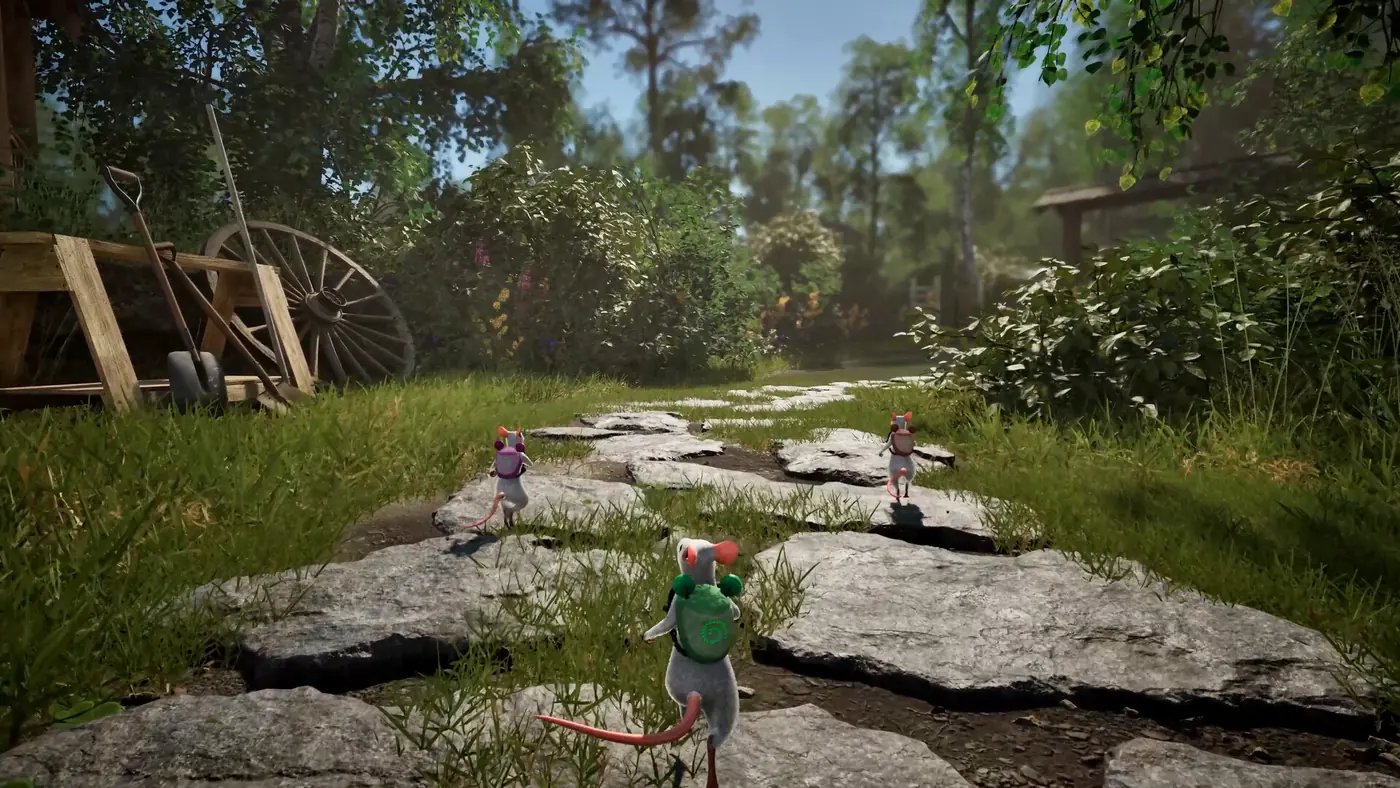 Official media
Read a room before you cross it
Every space in the demo is built from a few readable parts: a gap, a hanging point, a ledge, and something that can be moved. Before starting a traverse, name which of the three backpack jobs the space is asking for. The naming takes a second and removes most of the trial and error that makes a small map feel larger than it is.
Where a first run usually stalls
Three stalls account for most of the lost time. The first is treating the Shade as a last resort, when a puzzle built for two reads as impassable right up until the copy is tried. The second is skipping material on the way out and walking the same path twice. The third is leaving an area without checking what sits above it, which is where the glide earns its place.
None of that is difficulty. There are no enemies, no health bar and no failure built on damage, so a stall is always a missed affordance rather than a lack of skill. Backing out and looking again costs nothing.
With a second person on the couch
The demo supports two-player local split-screen, and that turns the route into a conversation. The second player has to join before the session starts, so the arrangement is decided at the beginning rather than halfway through, and online play is not part of the demo at all.
Expect puzzles to move faster and gathering to take longer, because two people wander in two directions. Neither pace is wrong, and the demo is short enough that both fit inside one sitting.
The objective chain, in order
Three goals, and they are sequential rather than parallel. The guardian magic has to be restarted before the Glimmer count matters, and the way home only opens once enough Glimmer has been collected.
- 1
Restart the guardian magic
The first goal, and the one that teaches the loop.
- 2
Gather enough Glimmer
Collect along the route instead of doubling back.
- 3
Use the Shade where two are needed
Any spot that expects a second pair of paws.
- 4
Brew what the puzzles ask for
Remedies come from gathered material, not from a shop.
- 5
Find the way home
The closing objective, once the Glimmer count is met.
The three places things get missed
Missed items cluster in predictable spots. High ground is the first: a ledge above the main path usually holds something, and the glide makes the trip down free. Water edges are the second, because the interesting material tends to sit at the boundary rather than in the middle of a clearing.
Spots that need the Shade are the third, and the easiest to walk past, because a solo player reads them as scenery until they realise a copy would fit. Any alcove that looks like it wants two mice at once is worth a second look before leaving the area.
Play it twice if the demo is still open
The demo closes on 9 November 2026, and it supports both solo play and two-player local split-screen. A second run with another person is the cheapest way to see what the Shade was standing in for, and the second player has to join before the session begins rather than during it.
Nothing carries over to the retail game on 1 December 2026, so there is no reason to protect a save. Treat both runs as practice, and leave the demo knowing how the backpack moves rather than how the story ends.