
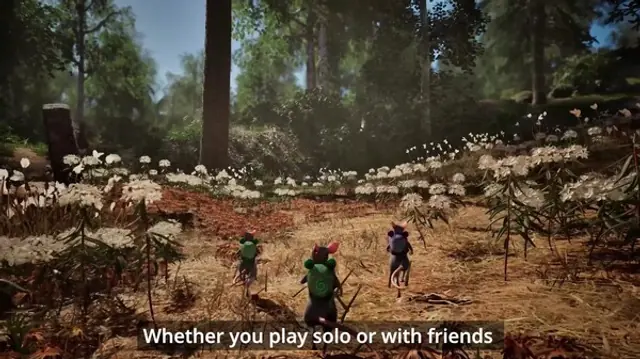
The Shade System is Hela's answer to a problem co-op games rarely solve: what happens to a puzzle built for four people when only one person is playing. The answer is a magical copy of your mouse that repeats whatever you were doing at the moment it appeared.
That single sentence covers the whole mechanic, and almost every mistake with it comes from reading the copy as a second character rather than as a recording. A Shade does not think, follow, or react. It performs one action again, on a loop, and the puzzle is built around what that repetition can hold in place.
A copy that repeats one action
The important word in the official description is repeats. When you create a Shade, the game takes the action you were performing at that instant and hands it to the copy. If you were holding a lever down, the Shade holds it down. If you were pulling a rope taut, the Shade keeps the tension.
That is why the system reads as a recording rather than a companion. There is no behaviour to manage and no pathing to correct. You decide what the copy will be doing by deciding what you are doing when you summon it, which moves the puzzle from coordination to timing.
The four jobs the copy covers
The official material names four uses, and they map onto distinct kinds of obstacle: holding objects, creating trampolines, acting as rope anchors, and solving environmental puzzles. Each one is a variation on the same idea — a position that needs a body to stay occupied.
| Job | What it solves | What the player does |
|---|---|---|
| Hold | A weight or switch that must stay pressed | Set the copy in place, then leave |
| Trampoline | A height the mouse cannot reach alone | Use the copy as the launch point |
| Rope anchor | A line that needs a fixed end | Tie off on the copy, then cross |
| Environmental puzzle | A mechanism that expects two participants | Split the two halves between you and the copy |
The table is worth reading as a list of what a level can ask for, because those four shapes recur across the demo's map. Once you can name which of them a room is presenting, the Shade stops being an emergency button and becomes the first thing you try.
Why repetition is the interesting part
A second player reacts. They see what you see, they adjust, and they can be told to wait. A Shade cannot be told anything, so the design has to make one frozen action enough — and it does that by choosing puzzles where the action itself is the answer.
That is a narrower design space than ordinary co-op, and it is why the mechanic feels tidy rather than busy. Nothing in the system depends on the copy understanding the room. It depends on you understanding the room well enough to leave the right action running behind you.
What the system is solving
Some of Hela's challenges are built for two, three, or four players. Without a substitute, that would make a solo purchase a reduced version of the game, and the Shade is the mechanism that prevents it: it lets one player fill the roles the room expects.
The consequence is worth stating plainly. Solo play is not a difficulty mode. It is the same content with the missing participants replaced by copies, and the copy is the reason the map does not need a separate solo layout.
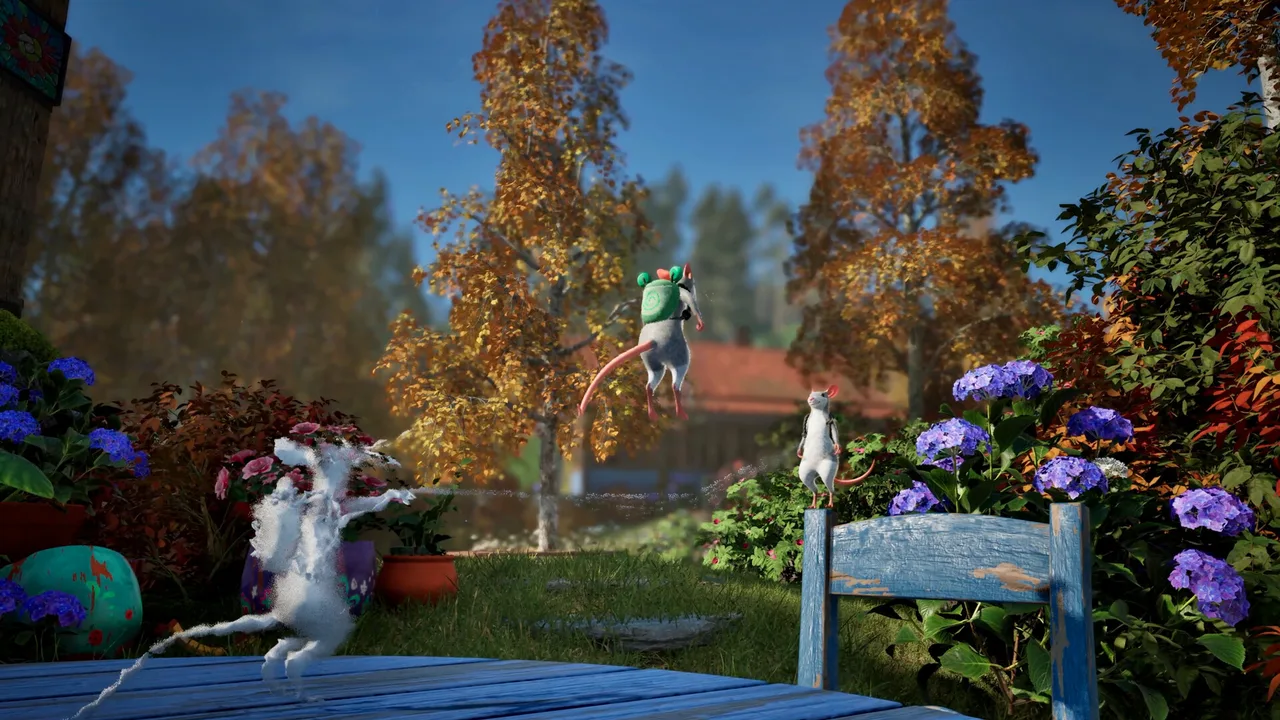 Official media
Solo is not a lesser version
Windup states the intent directly: the game is designed to feel complete no matter how many players join. That is a stronger claim than "solo is supported", and it changes what you should expect from the copy.
In a two-player split-screen session, the second person handles the second half of a puzzle. Alone, the Shade does that job instead. The difference is autonomy — a friend will notice things you did not, while a copy will only continue what you started. That makes solo runs faster to execute and slower to notice, which is the trade the system makes.
Reading a room for a Shade spot
Any space that seems to demand two simultaneous actions is a Shade space. The signals are consistent: two levers that must move together, a platform that needs weight while a path opens elsewhere, a gap that is too wide for a jump but has a point above it.
The habit that pays off is asking where a second pair of paws would stand before assuming an obstacle is impassable. Rooms that look like scenery often turn out to have a ledge or a hook that a copy could occupy, and a solo player who walks past those reads the level as harder than it is.
What the copy is not
It is not a combat unit. Hela has no traditional combat, no health bar and nothing that can kill a player, so the Shade never fights and never needs protecting. Anyone arriving from a co-op action game will look for a use that does not exist here.
It is also not autonomous. A Shade will not open a door you did not open, and it will not react to something you did not anticipate. Treat it as a lever you can leave behind and the system behaves predictably.
Where to practise it
The demo is the right place to build the habit, because nothing in it punishes a failed attempt. There are no enemies, no timer and no damage, so a puzzle that does not work costs a walk back rather than a life.
The demo runs until 9 November 2026 and supports solo play and two-player local split-screen. Online co-op is not part of the demo, though the full game will support up to four players online when it launches on 1 December 2026. A solo run is the clearer teacher for this particular system, because the copy only has to replace one person rather than fit around another.
- 1
Name the shape
Hold, trampoline, anchor, or two-body mechanism.
- 2
Set the action first
The copy inherits what you are doing when it appears.
- 3
Leave it running
Walk away and let the stored action do the work.
- 4
Re-summon when the room changes
A new obstacle usually wants a new stored action.
The one thing to unlearn
Players who have used summon abilities elsewhere expect a copy to follow them into a fight. Here the copy is scenery that holds a pose, and the sooner that expectation is dropped the faster the map opens up. The Shade is not a companion. It is the second pair of hands the level was designed around, handed to you at the moment you need them.