
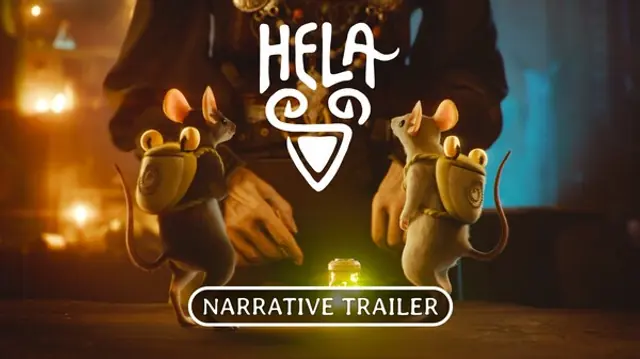
Hela: of Mice & Magic carries PEGI 3, an age rating of three and up, and the developers describe it as designed for players of all ages. Both statements are true and neither answers the question a parent is asking, which is whether the game will hold a child's attention and whether an adult in the same room will enjoy it.
The useful answer comes from what the game is missing rather than from what it contains. There is no traditional combat, no health bar, and nothing in the game that can kill the player.
Why the rating lands at three
PEGI 3 is the lowest rating the system issues, and games earn it by not containing anything that requires parental guidance. No violence against characters, no frightening content, no language, no gambling imagery.
Hela fits that description without stretching it. The premise is a small mouse helping a kind witch restore the harmony of a forest, and the obstacles are physics puzzles rather than enemies. The antagonists, such as they are, are gaps, weights and mechanisms.
No combat, and what replaces it
The absence of combat is not a gap that something else fills. It is the design: the game is an exploration adventure where the resistance comes from terrain and from puzzles that expect more than one participant.
What replaces a fight is coordination. The backpack gives the player movement and manipulation, the Shade System covers the roles a second player would fill, and brewing turns foraged material into tools. None of those systems has a fail state that costs more than a walk back.
That structure is why the rating and the design agree. A game cannot be frightening if nothing can hurt the character, and it cannot frustrate in the way combat does if losing is not possible.
What the official position actually says
The developers describe a heartwarming story about helping others, exploring nature and the power of cooperation, and they frame it as accessible to younger players while still offering plenty to discover for older audiences.
The second half of that sentence is the part worth taking seriously. "Accessible" is not the same as "shallow", and the claim being made is that the same content works at two levels: a child can move through the story, and an adult can find the routes and the optional content.
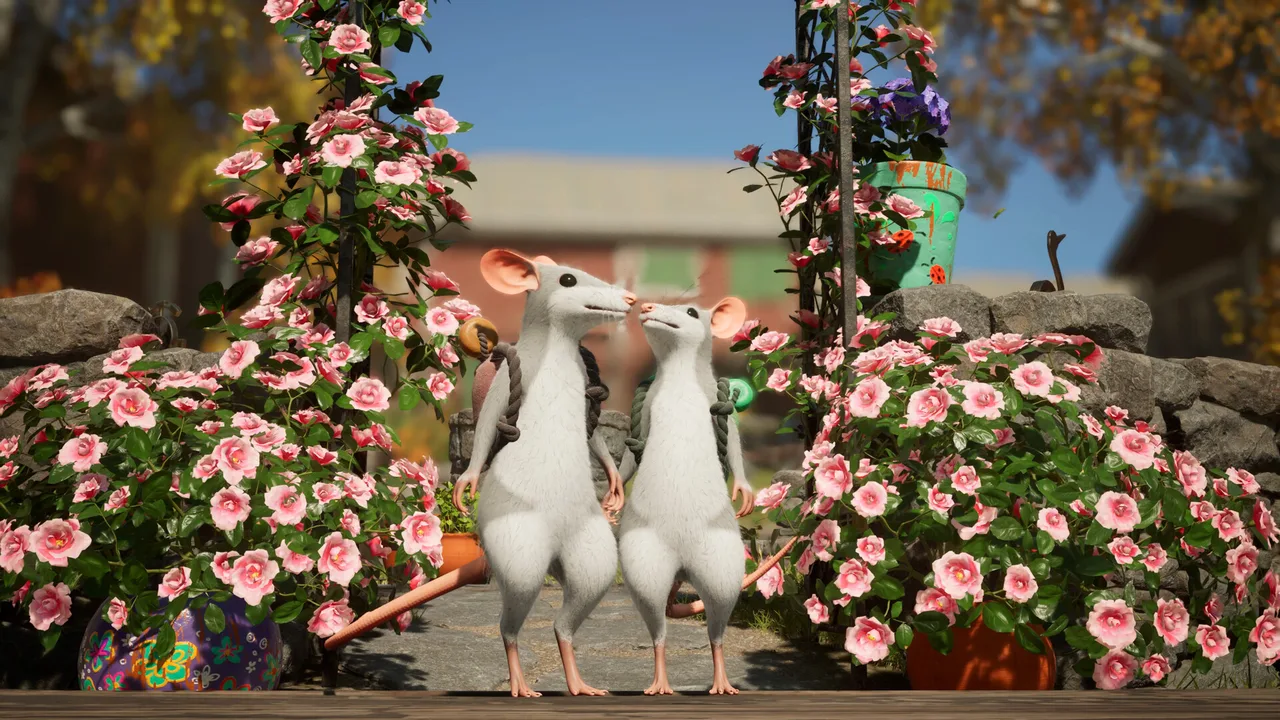 Official media
Where the real difficulty sits
Difficulty in this game is spatial rather than reactive. A room asks the player to notice that a ledge is reachable, that a mechanism needs weight, or that a copy would fit where a second person would stand.
That is a different demand from reflex, and it splits ages differently. A younger player who is comfortable with a thumbstick will move through the map without trouble but may walk past the optional routes; an older player will see the routes and may find the execution slow. Neither is blocked.
Reading is the one gate worth flagging. The demo's objectives are presented in text, and the game expects the player to follow a goal chain rather than a marker. A child who cannot yet read will need someone in the room, which is exactly the configuration the game is built to support.
Playing it with a child
Two-player local split-screen is the mode that makes this easy, and it requires no account, no headset and no second machine. Both players share one screen and one copy of the game.
There is one practical rule: the second player has to join before the session starts. Hela's demo does not accept a drop-in halfway through, so a parent planning to hand over a controller should connect it first rather than after the first puzzle.
The other thing that helps is that nothing can be failed. A missed jump costs a walk, not a life, and there is no penalty screen to manage. For a first co-op game with a child, that removes most of the reasons a session ends badly.
Playing it alone as an adult
Solo is a complete version of the content, not a reduced one — the Shade System exists specifically so that one player can fill roles the room expects. The pacing is calm by design, and the game describes itself as something to take slowly.
Whether that holds an adult for a full playthrough depends on appetite for exploration rather than on challenge. There is no combat to master and no build to optimise. What there is, is a world built at mouse scale where a fallen branch is a bridge, and the interest comes from reading it.
If it is meant as a gift
The physical run is the Harmony Edition, and it carries the same five items wherever it is sold: the game on disc or cartridge, a premium box, a digital soundtrack, a double-sided poster that includes a map, and a forty-eight page softcover art book titled The Heart of Hela.
The rating is PEGI 3 across that whole run, on PlayStation 5, Xbox Series X and Nintendo Switch 2. For a gift, the practical detail is that the box contains a poster and a book as well as the game, which makes it a more substantial object than a case with a disc in it.
Stock is limited to the retail channels Microids supplies, so the physical option is the one with a supply question attached. The digital release has no such constraint.
What to check before deciding
The demo is the cheapest way to answer the question, and it is open until 9 November 2026. It runs thirty to sixty minutes, supports solo and two-player split-screen, and does not carry progress into the retail game.
If the demo is gone by the time the question comes up, the things to look at are the rating, which is PEGI 3 across the physical run, and the two facts that decide most purchases: there is no combat, and local split-screen works with a second controller on the same screen.
The game launches on 1 December 2026 for PC, PlayStation 5, Xbox Series X|S and Nintendo Switch 2, with up to four players online in the full version.