
Hela: of Mice & Magic is a game about moving things, so judging it means judging how movement feels. That sounds like a narrow test until you notice how much of the design hangs off it: a frog backpack that glides, swings and carries, copies of yourself that hold a lever while you cross, branches and puddles that only count as obstacles because of your size. The demo, a standalone side story of 30 to 60 minutes, is enough to judge that feel. It is not enough to judge the game built around it.
What the demo settles
Movement is the first thing it answers. Gliding is a commitment to a launch point, swinging is a commitment to a line, and carrying is a commitment to weight. Those three behave differently enough that the backpack reads as a tool rather than a vehicle, and the difference matters: a vehicle changes how fast you cross a room, a tool changes what you can do once you arrive.
The second thing it answers is whether the backpack is genuinely useful. Carrying is the verb that decides this, because it turns scenery into inventory. A demo that let you pick objects up but gave them nothing to do would expose the whole loop as thin; instead the props feed directly into the puzzle grammar, and the same object you hauled across a clearing becomes the thing that holds a mechanism open.
The Shade System answers a third question, which is how much freedom a puzzle has. Summoning a copy of your mouse means a coordination problem can be solved in more than one arrangement of bodies, and it means a solo player is not locked out of the puzzles that were built for two. The demo makes a solo run feel complete rather than compliant.
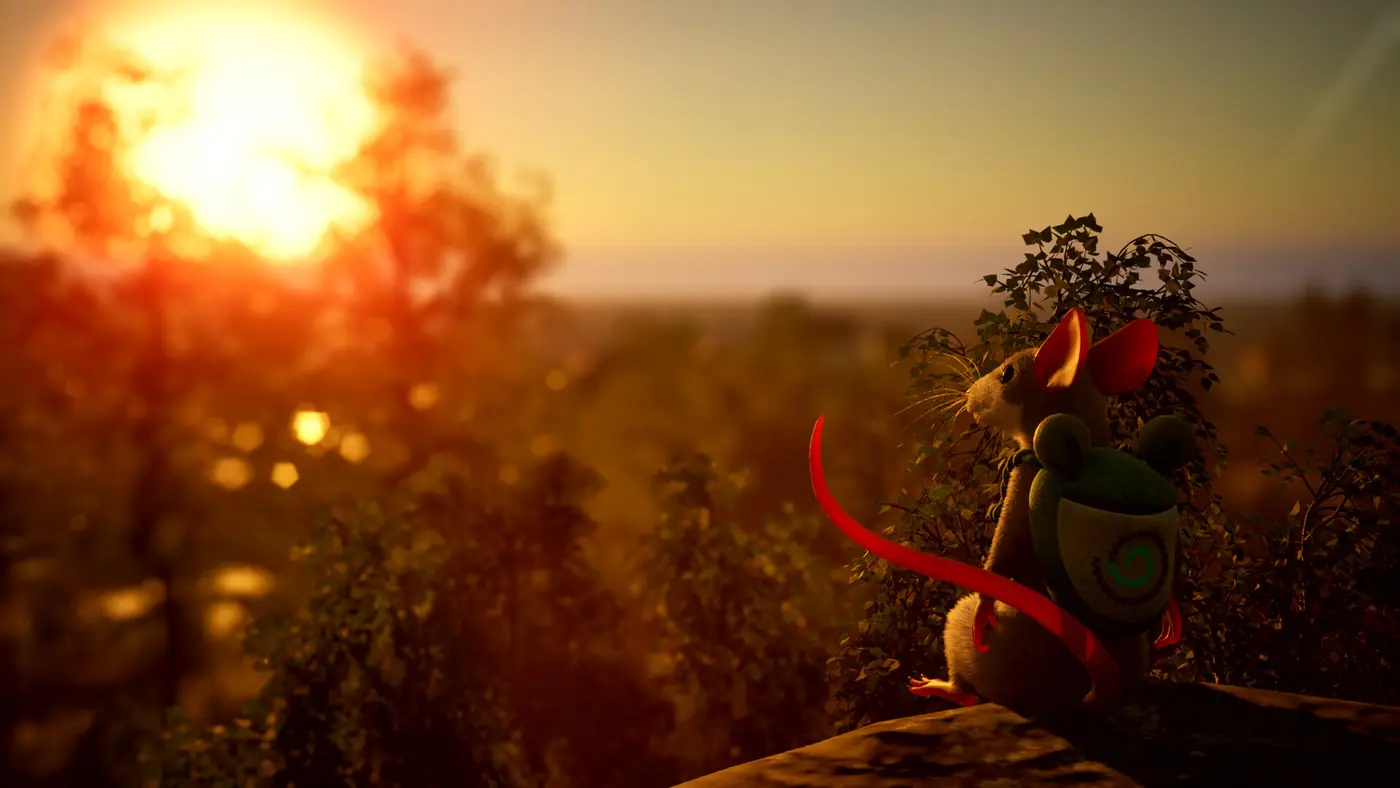
Direction is the fourth. Forest, meadow, wetland and the dens that connect them are all drawn at the height of a mouse, and the palette and the shapes come from northern Sweden, which is where the studio, Windup Games, is based. Whether that reads as charming or merely tidy is a matter of taste, but it is consistent, and consistency is what makes a small world feel deliberate instead of empty.
The last settled thing is tone. Removing the fail state does something specific to pacing: it takes away the spikes, so a difficult puzzle produces patience rather than frustration, and a solved one lands as relief rather than victory. That is a real design position, and the demo holds it without wobbling.
What the demo cannot settle
Scale is the biggest gap. The demo is a separate story on its own map, so it says nothing about how large the full world is, how long the campaign runs, or whether the map keeps introducing new arrangements of the same four biomes deep into the game.
Difficulty is the second gap. Thirty to sixty minutes can show the grammar of a puzzle; it cannot show a curve. Whether the puzzles keep escalating, whether the later ones combine Froggy and Shade in ways the demo never attempts, and whether the middle of the game sags under repetition are all open questions that only the finished product answers.
The social side is a third gap. The demo offers 2-player local split screen and no online play, and the second player has to join before the session starts rather than dropping in midway. Four-player online arrives with the full game on 1 December 2026, so the experience of four mice in one puzzle is outside what the demo can show.
Hardware is the fourth. The demo runs on Steam, the Epic Games Store and the Xbox PC app, which leaves the console builds — PlayStation 5, Xbox Series X|S and Nintendo Switch 2 — as separate questions with their own performance profiles.
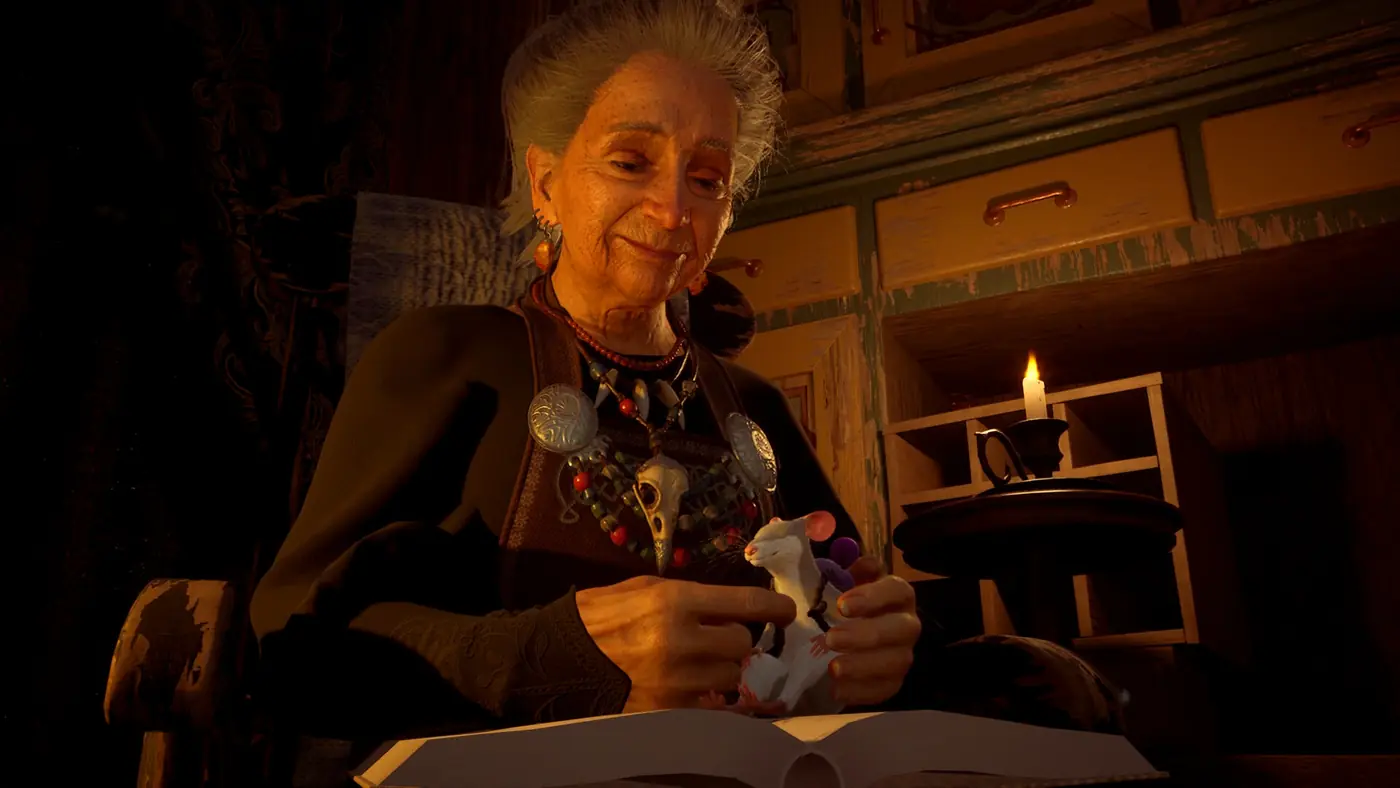
Story is the fifth. The premise is clear and generous: a witch who keeps the land in balance falls ill, and her smallest familiar goes out to hold the line in her place. What a demo of that length cannot show is whether the writing carries a full campaign, whether the familiar develops as a character, or whether the harmony framing stays a frame rather than becoming a lesson repeated at every puzzle.
A score belongs to none of this. A number at the end of a review is a claim about a finished game, and the finished game does not exist yet. What exists is a well-built argument for a design position, demonstrated at short range.
 Official media
Who it is for
The first audience is players who want exploration without pressure. No enemies, no health bar and no damage means a session can be spent on a view, a route or a stubborn remedy, and stopping in the middle costs nothing.
The second is a pair on a couch. Local split screen for 2 players is in the demo and in the full game, and the shared screen arrangement suits a puzzle game where both people need to see the same mechanism at the same time. The caveat is that the second player has to be there from the start in the demo.
The third is anyone who bounces off combat. This is a game where the answer to a blocked path is a better route or a better remedy, never a better attack, and the whole loop is built to reward that instinct.
It is a poor fit for players who want a skill ceiling that comes from enemies. There is no timing window to master against an opponent, no build to optimise for damage, and no difficulty setting implied by a fight. The challenge is spatial, and it stays spatial.
What 1 December adds
The full release arrives on 1 December 2026 with the complete map and the rest of the story, and it adds 4-player online to the local split screen options. Online play runs through Epic Online Services and needs a third-party account linked to Steam, which is worth knowing before a group plans a session.
It also ships on PlayStation 5, Xbox Series X|S, Nintendo Switch 2 and PC, with Xbox Game Pass on day one for Xbox Series X|S and PC. The physical Harmony Edition exists for PS5, Xbox Series X and Switch 2 only, and the PC and Xbox Series S releases are digital.
That is the shape of the decision. The demo answers whether the movement is worth your hands. Everything about whether the game is worth your month stays open until the release does the answering.