
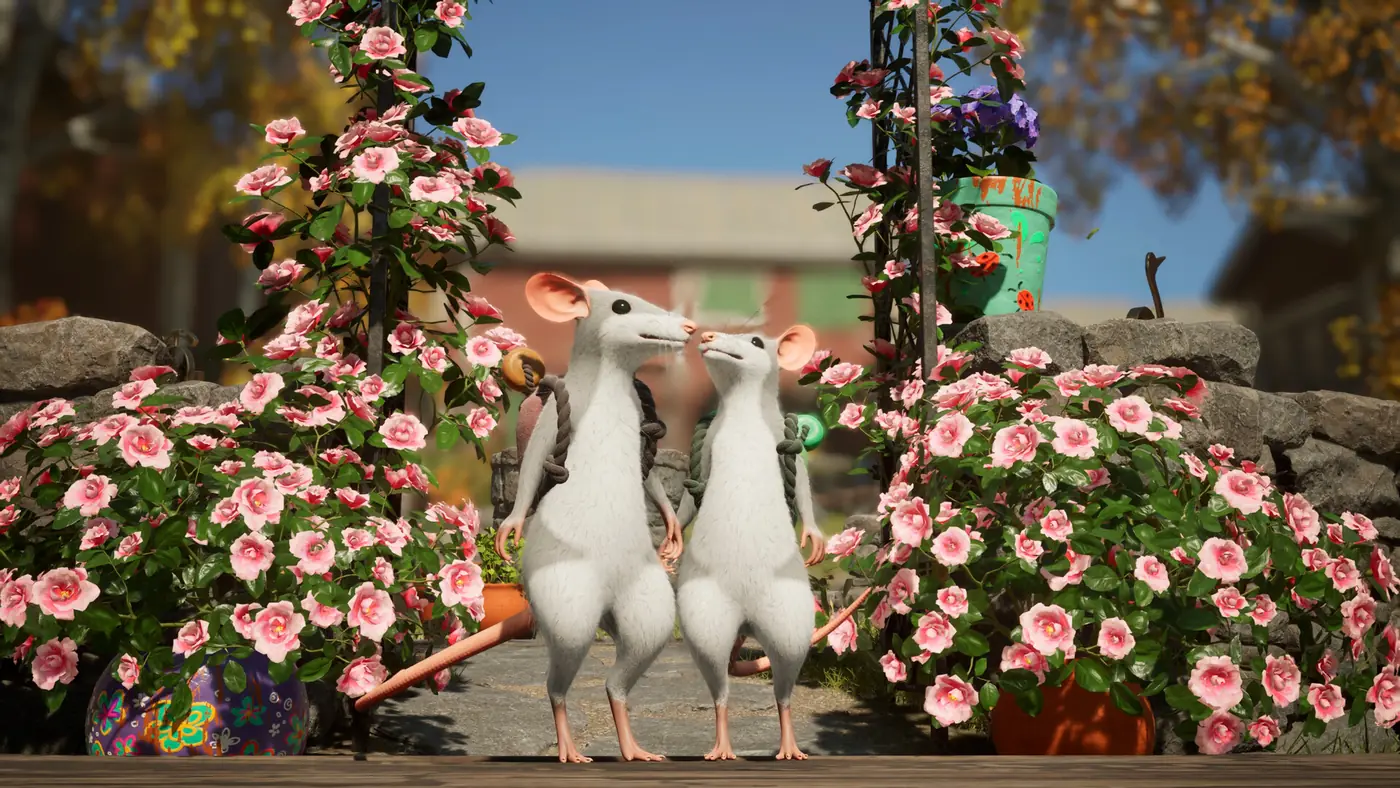
Hela: of Mice & Magic ships with ten languages for interface text and subtitles. The list is English, French, Italian, German, Spanish for Spain, Japanese, Korean, Portuguese for Brazil, Simplified Chinese and Traditional Chinese. Full voice-over is not among the options, so dialogue is carried by text in every one of those languages rather than by a dub.
That shape is common for a game from a small studio with a wide retail reach. Text localisation is cheaper to produce and easier to patch than recorded audio, and it lets a Swedish-developed title appear in ten languages at launch without casting voice actors in ten languages. The trade is that no version has spoken dialogue in the language of its market.
The ten languages
| Language | Interface | Subtitles |
|---|---|---|
| English | Yes | Yes |
| French | Yes | Yes |
| Italian | Yes | Yes |
| German | Yes | Yes |
| Spanish (Spain) | Yes | Yes |
| Japanese | Yes | Yes |
| Korean | Yes | Yes |
| Portuguese (Brazil) | Yes | Yes |
| Simplified Chinese | Yes | Yes |
| Traditional Chinese | Yes | Yes |
Both columns are filled for all ten, which is the useful detail. A language that appears only in the subtitle column would mean menus and on-screen prompts stay in English, and a language in the interface column only would mean spoken or written dialogue is not translated. Here the two match, so a player choosing German gets a German menu and German subtitles rather than one without the other.
 Official media · Steam
Interface and subtitles, not voice
There is no audio column to read, because no full voice track is offered beyond the original performances. Dialogue, narration and tutorial prompts are subtitled, and the interface text is translated, but the voices themselves do not change with the selected language.
For most players that is enough, since the game leans on environmental storytelling and short exchanges rather than on long spoken scenes. It does mean that a player who prefers dubs has no option, and that anyone who needs spoken dialogue in their own language will not find it here.
An interface translation covers more than menus. Item names, recipe labels, tutorial text and the short prompts that appear during puzzles all pass through the same table, so a player choosing Italian gets those in Italian as well as the dialogue subtitles. The distinction matters for a game built on gathering and brewing: the names of plants and remedies sit in the interface, and a translated set makes the crafting loop readable without switching back to English.
The setting is not tied to a single language either. The world is drawn from northern Sweden, but the text list includes no Swedish and no Norwegian, Danish or Finnish. The Scandinavian setting is visual and thematic rather than linguistic.
Three names for one game
The game carries three official titles. The global name is Hela: of Mice & Magic, spelled with a colon and an ampersand. The Chinese release is titled Hela:鼠鼠奇旅, and the Japanese release is Hela:ちいさなねずみと魔法の森.
The differences are not translations of the same phrase. The Chinese subtitle reads roughly as a mouse's wondrous journey, and the Japanese one as a small mouse and the magic forest. Both describe the premise rather than transliterating the English words, which is why neither matches the global title word for word.
The searched form is different again: most people type "hela of mice and magic", with the ampersand written out as "and". All three titles and the searched form point at the same game, so a store search in any of those markets should resolve to the same product.
None of the three titles is a literal rendering of the others, which is why a search in one language does not surface the rest by text match alone. The global name keeps the ampersand, the Chinese title replaces the subtitle with a phrase, and the Japanese title spells out the forest. A store page can therefore look unrelated to a player who knows only one of the names, even though the product behind it is the same.
 Official media · Steam
One table for every platform
The language list is the same across PC, PlayStation 5, Xbox Series X|S and Nintendo Switch 2. There is no platform with an extra language and no platform missing one, so the choice of system does not change which text a player can read.
That consistency is worth stating because platform stores present the data differently. One store may show a single list of supported languages, another may separate interface from subtitles, and a third may summarise both as "text". The underlying set is identical; only the presentation varies.
What is not on the list
Russian and Polish do not appear among the ten. Neither do Arabic, Dutch, Turkish or any of the Nordic languages. For a game set in a Swedish landscape and sold across Europe, the omission of Swedish is the one that stands out, and it follows the same pattern: the ten-language set is a commercial choice rather than a reflection of the setting.
Chinese in two scripts
Simplified and Traditional Chinese appear as separate entries rather than one combined Chinese option. That matters because the two are not interchangeable for readers: Simplified is standard in mainland China, and Traditional is standard in Taiwan, Hong Kong and among overseas readers who prefer it.
Shipping both means the Chinese release does not force one script on the other audience, and it also means the mainland title Hela:鼠鼠奇旅 is not the only Chinese-facing name a player will encounter. The script choice sits inside the game's settings rather than being decided by the store region.
Choosing a platform on language grounds
Because the table is identical everywhere, there is no language reason to prefer one platform over another. The decision comes down to hardware, price and whether a physical copy matters, not to whether a particular store carries a particular translation.
The one language-related difference between versions is the box. A physical copy carries packaging text in the language of the market where it was sold, while the disc or cartridge inside carries the same ten-language game as every other copy. A collector buying an imported edition gets local packaging and the full text list, which are two separate things.